



Keyword research for SEO is the foundation of every successful search strategy in today’s competitive digital space. It helps you understand how people search, what language they use, and which topics truly matter to them. Without proper keyword research for SEO, even high-quality content can remain invisible on search engines. A strong approach focuses on identifying the right search intent, evaluating keyword competition, and choosing terms with real ranking potential.
When done correctly, keyword research supports clear content decisions, improves organic traffic, and builds long-term authority. In 2026, search engines reward relevance and usefulness more than ever, making smart keyword research essential for visibility, growth, and consistent performance in search results.
What Is Keyword Research? (Quick Definition + TL;DR)
Keyword research for SEO means finding the exact words people type into search engines when they want information, products, or services. Every keyword idea represents intent, emotion, or a decision point. When keywords match intent, content becomes relevant and trustworthy.
TL;DR: keyword research for SEO helps evaluate ranking potential, understand keyword metrics, and build a clear keyword strategy. It connects demand with content and helps websites grow authority and traffic.
How SEO Keywords Work (Google, Search Engines, and SERPs)

Search engines understand keywords through meaning, not repetition. Google analyzes context, user behavior, and satisfaction before ranking pages on the Google search result page (SERP). Keywords help search engines understand topics, but value decides rankings.
Strong results depend on domain authority, intent match, and engagement signals. Modern SERPs also include the People also ask section and related searches, which expand visibility and influence how users explore topics.
| SERP Element | Purpose |
| Organic results | Main rankings |
| People also ask section | Intent expansion |
| Related searches | Topic discovery |
Understanding Search Intent (The Most Important Step)
Search intent explains why someone searches. Content that ignores intent rarely ranks or converts. Pages that match intent earn trust and clicks.
Most searches fall into informational keywords, transactional keywords, commercial keywords, and navigational keywords. Matching intent improves conversion potential and reduces wasted effort on the wrong traffic.
“Intent is the difference between traffic and results.”
Types of Keywords (By Length and Branding)
Short-Tail vs Long-Tail Keywords
Keyword length affects competition and clarity. Short-tail keywords bring volume but face heavy keyword competition. Medium-tail keywords balance reach and intent. Long-tail keywords attract focused users and often convert better.
Branded vs Non-Branded Keywords
Branded searches show loyalty. Non-branded searches support discovery. A balanced mix of keyword types builds authority and improves organic visibility.
| Keyword Length | Typical Outcome |
| Short-tail | Awareness |
| Medium-tail | Consideration |
| Long-tail | Conversions |
Step 1 — Define Your Business Goals and Audience Needs
Keyword research for SEO starts with clarity. Keywords should support business goals like leads, sales, or visibility. Without alignment, traffic rarely delivers value.
The audience needs to shape language. Small wording changes can affect keyword potential. Small business owners, SEO teams, and SEO contractors succeed when they study how people describe real problems.
Step 2 — Generate Keyword Ideas from Seed Keywords
Every strategy begins with a seed keyword. This core term represents a topic, product, or service. From it, keyword generation expands into variations.
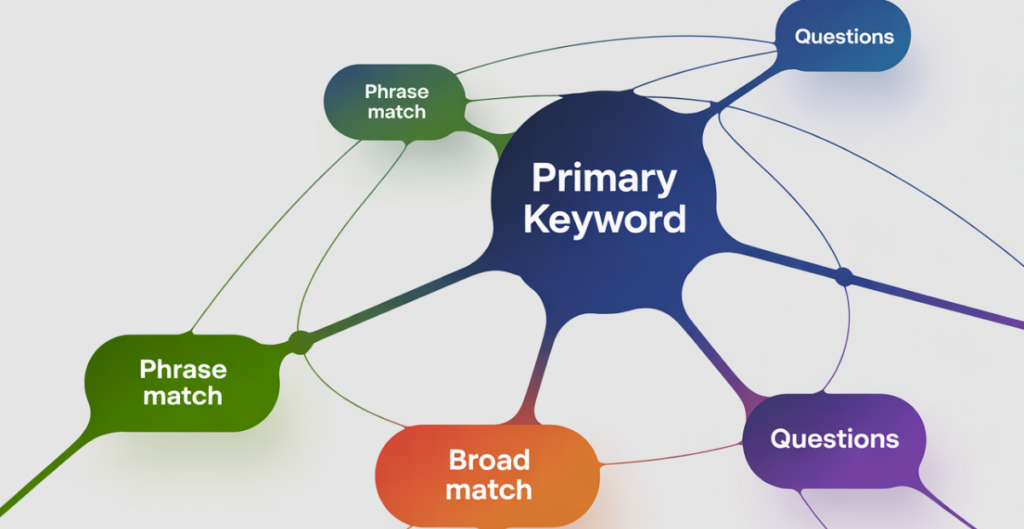
Using keyword research tools reveals phrase match, broad match, and question keywords. These patterns show how users actually search, not how marketers assume.
Step 3 — Analyse Keywords (Volume, Difficulty, Competition, Potential)
Analysis turns ideas into strategy. Search volume shows demand. Global search volume shows market size. Keyword difficulty shows effort required to rank.
Smart strategies focus on low competition keywords with clear intent. These terms often outperform high-volume keywords with weak conversion potential.
| Metric | Meaning |
| Search volume | Demand |
| Keyword difficulty | Ranking effort |
| Keyword potential | ROI estimate |
Step 4 — Competitor Keyword Research (Borrow What Already Works)
Competitor keyword research speeds up learning. Studying competitor URLs reveals top traffic keywords already proven in search results.
Through competitor analysis and keyword gap analysis, hidden organic keywords appear. These content gaps offer fast opportunities for growth.
Step 5 — Find Related Keywords (LSI/NLP) and Secondary Terms
Search engines understand topics semantically. Related keywords and secondary keywords improve topical depth and clarity.
Signals from People Also Ask and related searches reveal how topics connect. This strengthens content optimization and long-term authority.
Step 6 — Keyword Clustering and Content Cluster Planning
Keyword clustering groups terms by intent and topic. A content cluster connects one main page with supporting pages.
This structure improves internal linking, crawl efficiency, and organic visibility for products. Over time, clusters increase authority and rankings.
| Cluster Element | Role |
| Core page | Authority |
| Supporting pages | Depth |
| Internal links | Relevance |
Step 7 — Turn Keywords into a Content Brief and On-Page Plan
Keywords gain value through execution. A clear content outline maps primary and secondary keywords to structure and flow.
Strong on-page SEO integrates keywords naturally. Clear SEO writing focuses on usefulness and supports a consistent content plan.
Step 8 — Best Practices, Common Mistakes, and Updating Your Strategy
SEO changes constantly. Algorithm updates, including core update and spam update, reward relevance and punish shortcuts like link buying or mass guest post request tactics.
Regular reviews and keyword rank tracking protect rankings. Updating strategy keeps performance stable and future-proof.
Tools, Platforms, and AI-Powered SEO Ecosystems
Modern workflows rely on advanced platforms. Semrush, Ahrefs, Surfer, Rankability, SERanking, and Search Atlas support research and execution. AI-powered SEO tools speed analysis through AI-powered features.
The Semrush SEO Toolkit includes Semrush Keyword Overview, Semrush Keyword Magic Tool, Keyword Gap report, and Organic Research report. Content teams use Semrush Content Toolkit (Contentshake AI) and Semrush SEO Writing Assistant. Ahrefs AI Content Helper offers strong alternatives. A detailed Semrush review often highlights depth, while a Semrush vs Ahrefs comparison depends on workflow preference.
| Tool | Strength |
| Semrush | All-in-one research |
| Ahrefs | Link intelligence |
| Google Keyword Planner | Demand data |
| Google Search Console | Performance insights |
Case Insight: Strategy Over Volume
A US-based brand shifted away from high-volume keywords. By targeting overlooked phrases with strong intent and realistic difficulty, organic traffic increased steadily and conversions doubled. The intent-first keyword strategy created sustainable growth and new partnerships with brands.
Final Thoughts
Keyword research for SEO in 2026 rewards clarity, intent, and structure. When research aligns with execution, rankings follow naturally. Strong strategies build authority, protect organic visibility, and drive long-term success in competitive markets.